How an ice dam forms
- Heat escapes from the living space into the attic and warms the roof deck.
- Snow on the upper roof melts, even on cold days.
- Meltwater runs down to the eaves, which sit over the cold overhang.
- The water refreezes into a ridge of ice along the edge of the roof.
- More meltwater backs up behind the ice and works its way under the shingles.
What Massachusetts requires
Massachusetts amends the residential code so that, in areas with a history of ice forming along the eaves, an ice barrier is required under asphalt shingles and several other roof coverings. It consists of at least two layers of underlayment cemented together, or a self-adhering polymer-modified bitumen sheet.
Contractors commonly run the ice barrier from the eave edge to a point at least two feet inside the warm wall line, and also install it in valleys and around chimneys and skylights. Ask exactly where yours will go.
Ice barrier is not the whole answer
Ice barrier keeps backed-up water out, but ice dams form because heat reaches the roof. Balanced attic ventilation, with intake at the soffits and exhaust at the ridge, keeps the deck colder. Baffles keep insulation from blocking soffit vents. Air sealing around chimneys, light fixtures and attic hatches stops warm air from leaking up. Insulation work is often a separate job, but it pays to plan it alongside the roof.
Capes, knee walls and complicated roofs
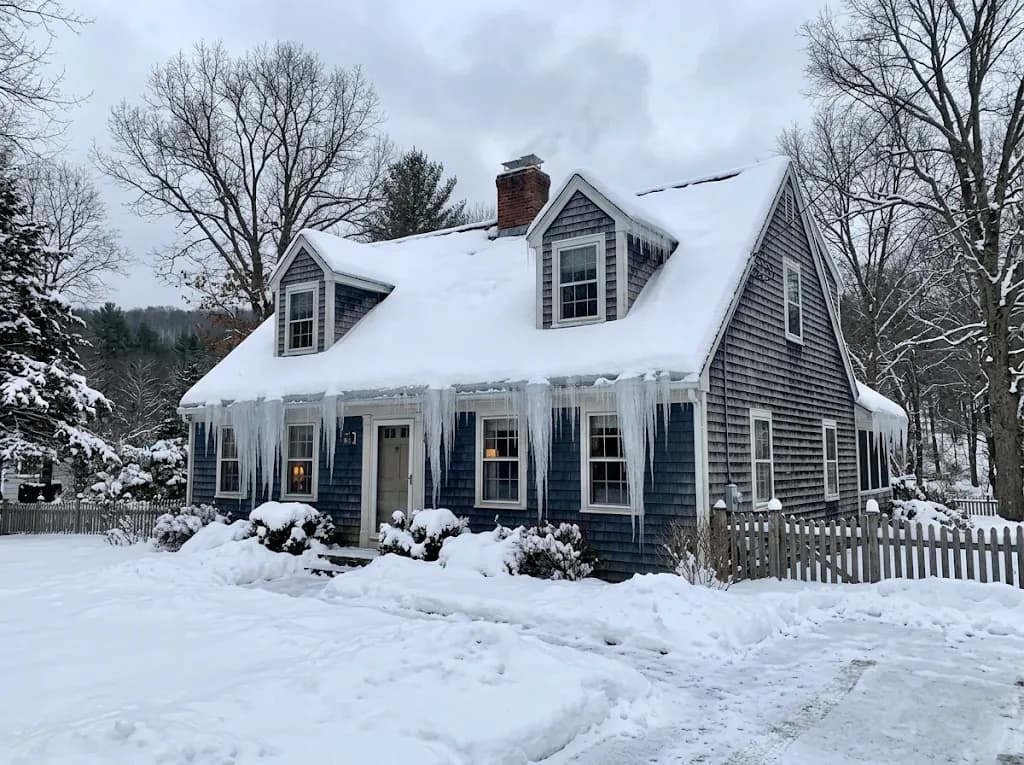
Cape-style homes with finished upper floors are prone to ice dams because their sloped ceilings leave little room for insulation and airflow. Valleys, dormers and low-pitch sections also collect snow. See our page on East Longmeadow homes for an example of how this plays out.
Metal roofs and snow
Metal sheds snow, so ice is less likely to build up along the eaves, but sliding snow needs snow guards above doors and walkways, and the attic still needs ventilation. More on our metal roof page.
Questions to ask about ice dams
- Where will the ice barrier go, and how far up the roof?
- Will it also go in the valleys and around chimneys and skylights?
- What intake and exhaust ventilation will the attic have?
- Will baffles keep the soffit vents open?
- Can anything be done about air leaks into the attic while the roof is open?
Want a contractor to look at your roof? One call connects you with a participating local roofer.
Call (888) 292-4916Questions homeowners ask
Will a new roof stop ice dams?
A new roof with a full ice barrier keeps meltwater from getting in, but ice dams form because of heat loss into the attic. Ventilation, air sealing and insulation are what reduce them.
Should I put heat cables on my roof?
Heat cables can keep paths open in trouble spots, but they don't address the cause. Talk with your contractor about ventilation and the ice barrier first.