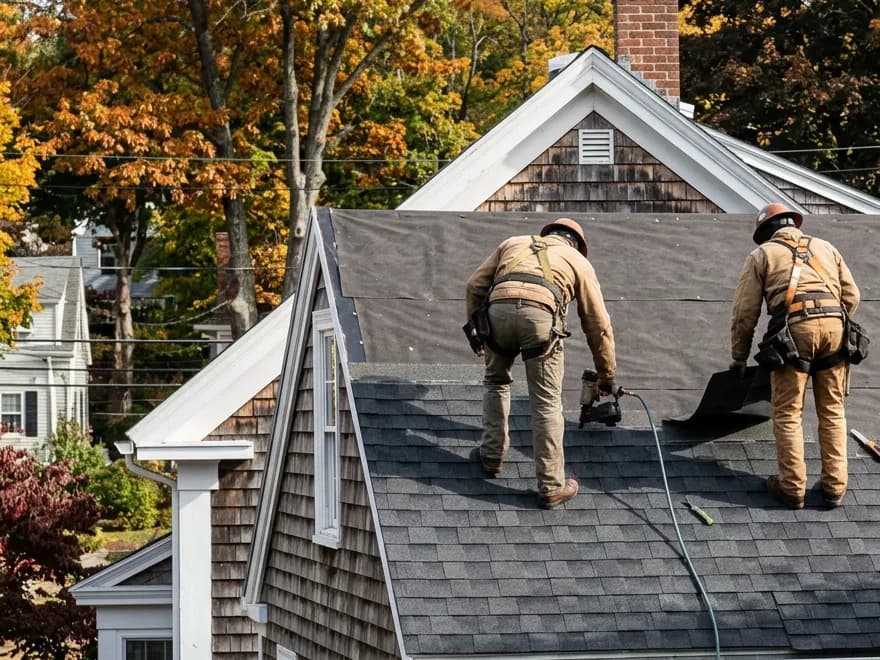
Architectural vs. three-tab shingles
Three-tab shingles are the flat, single-layer style found on many older roofs. Most replacements now use architectural (laminated) shingles, which are thicker, give the roof more depth and come in a wide range of colors. Ask to see sample boards outdoors: a color looks different on an overcast New England afternoon than it does in a brochure.
What sits under the shingles
- Ice barrier: a self-adhering membrane along the eaves, in valleys and around chimneys and skylights. Massachusetts requires one in areas with a history of ice dams.
- Underlayment: synthetic or felt over the rest of the deck as a second line of defense.
- Starter strip and drip edge: seal the roof edges and guide water into the gutters.
- Flashing: step flashing along walls and dormers, counter-flashing at chimneys, and new boots around plumbing vents.
- Ventilation: ridge vents paired with soffit intake keep the attic cooler in summer and drier in winter.
Want a contractor to look at your roof? One call connects you with a participating local roofer.
Call (888) 292-4916Wind, snow and the way shingles are nailed
How well shingles hold in high wind depends heavily on installation: the nailing pattern, the number of nails per shingle and whether the sealant strips bond. Western Massachusetts has seen serious wind. The June 1, 2011 tornado crossed more than six miles of Springfield, so ask how the crew nails and what the manufacturer specifies for higher-wind installs.
Choosing a color for a New England house
Charcoal, slate-gray and weathered-wood tones are common on colonials, Capes and Victorians around the Pioneer Valley. Darker roofs absorb more summer heat, which makes attic ventilation more important. In a local historic district, a change in roofing material or appearance may need approval first: in Springfield that is the Springfield Historical Commission, and Longmeadow has its own historic district commission.
What shortens a shingle roof's life
- Poor attic ventilation that bakes shingles from below
- Recurring ice dams that push water under the bottom courses
- Overhanging branches that drop debris and keep the roof damp
- Moss and algae on shaded, north-facing slopes
- Roofing over an existing layer instead of tearing off to the deck
Questions homeowners ask
How long do architectural shingles last in Massachusetts?
Many architectural shingle roofs last roughly 20 to 30 years, but ventilation, sun exposure, tree cover and installation quality make a big difference. Manufacturers publish their own coverage terms, so ask the contractor for the paperwork.
Do I need a permit for a shingle roof in Springfield?
Reroofing in Massachusetts generally requires a building permit. Your contractor usually files it with the city's Building Division and names the Construction Supervisor responsible for the job.
Should the gutters be replaced with the roof?
Not always. Gutters in good shape and properly pitched can often stay. Many homeowners replace the drip edge and gutters at the same time so they line up with the new roof edge.