A planned mill city
Starting around 1848, the Hadley Falls Company laid out a canal system to power mills along the Connecticut River and built rows of housing for workers. Later mill owners added hundreds more tenement buildings. Much of that early company housing is gone, but Holyoke still has many brick and wood-frame multi-family buildings, especially in neighborhoods close to the canals.
Victorian homes and complicated roofs
Away from the canals, Holyoke's higher neighborhoods have Victorian and early-1900s homes, some with steep, complicated roofs: turrets, dormers, multiple valleys and tall chimneys. Every one of those is a flashing detail. On houses like these, the crew's experience matters as much as the material.
Flat roofs behind parapets
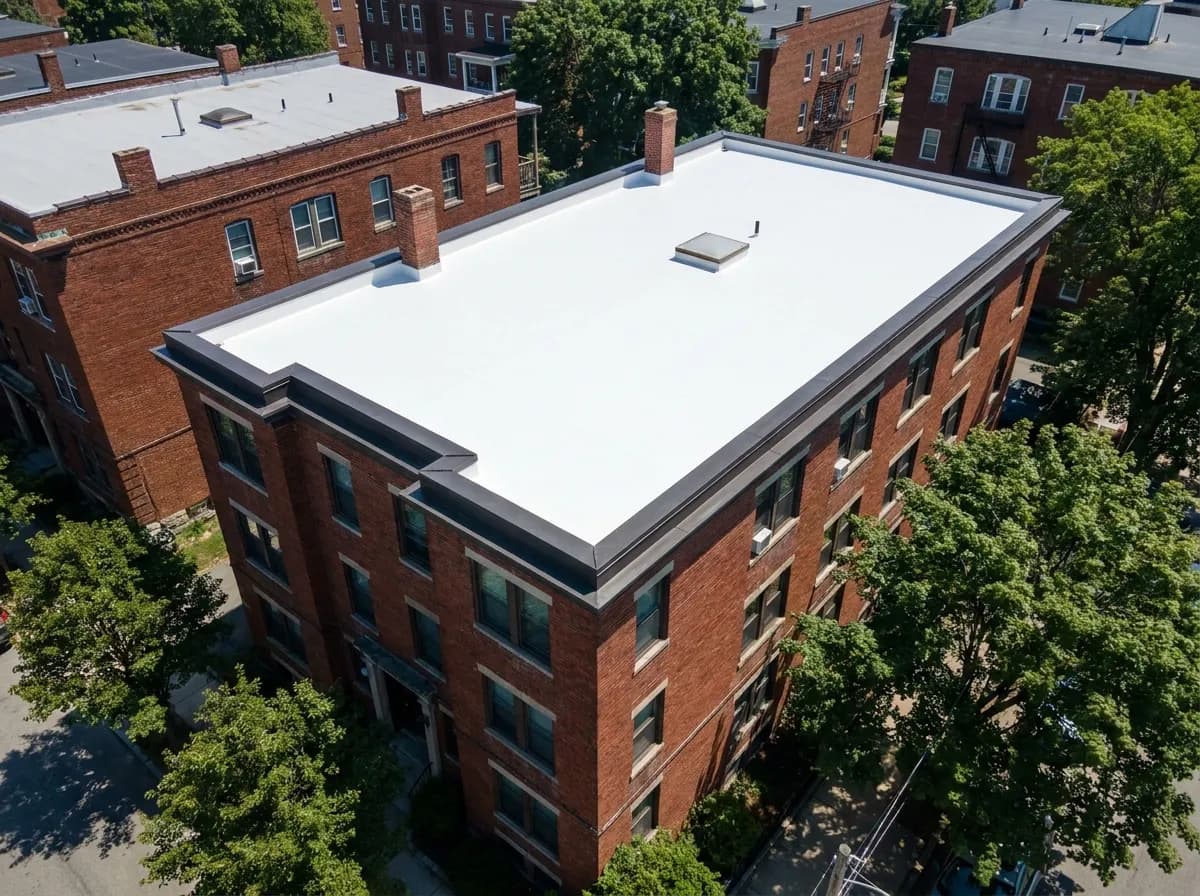
Many of the city's brick multi-family buildings have low-slope roofs hidden behind parapet walls. Those need a membrane system, careful flashing up the parapets and drainage that actually works. Our low-slope roof page covers the options.
Permits and preservation
The City of Holyoke's building department issues reroof permits, which your contractor usually files. On older properties, also check whether the building sits in a local historic district or carries a preservation restriction before changing roofing materials.
Want a contractor to look at your roof? One call connects you with a participating local roofer.
Call (888) 292-4916Holyoke roof questions
Can a slate roof be replaced with asphalt shingles?
Often it can. On older Holyoke homes, ask a contractor whether the slate is truly at the end of its life, and check first whether the property is in a local historic district or has a preservation restriction.
Who handles flat roofs on brick multi-family buildings?
Contractors who install low-slope membrane systems. When you call, describe the building so you're connected with a contractor who does that kind of work.