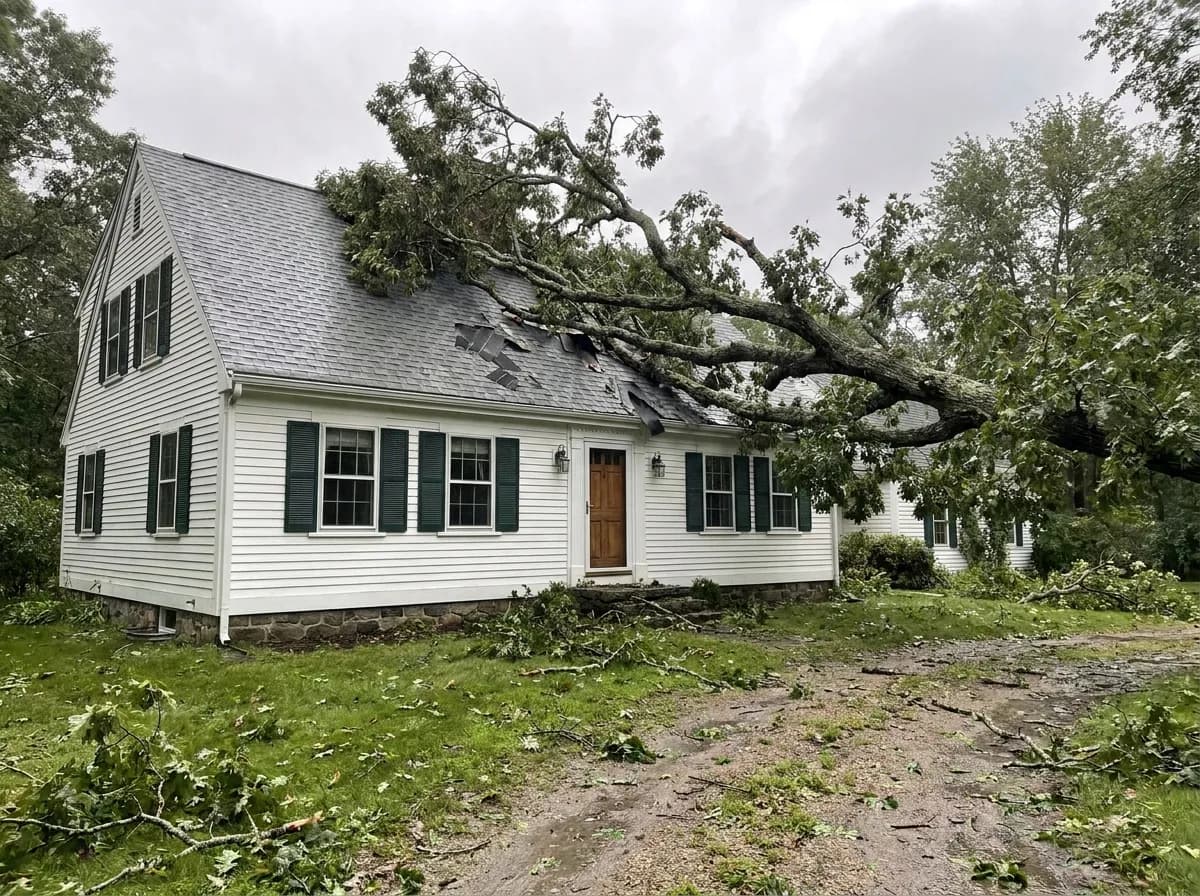
Storms that have shaped local roofs
- June 1, 2011: an EF3 tornado traveled roughly 39 miles from Westfield to Charlton, crossing West Springfield, more than six miles of Springfield, then Wilbraham, Monson and Brimfield. The state's Division of Insurance reported roughly 9,500 insurance claims.
- July 26, 2011: the National Weather Service attributed heavy tree damage in Wilbraham to a thunderstorm microburst with winds up to about 100 mph.
- October 29–30, 2011: a pre-Halloween nor'easter dropped heavy, wet snow on trees still in leaf. Branches snapped across Western Massachusetts and hundreds of thousands of homes lost power.
Many roofs installed during the 2011–2012 rebuild are now about 15 years old. If yours is one of them, an inspection is worth scheduling before the next winter.
What storm damage looks like on a roof
- Shingles that are lifted, creased or missing, with underlayment showing
- Punctures or cracked boards where limbs came down
- Bent or loosened flashing at chimneys and walls
- Gutters pulled away from the fascia
- New stains on ceilings or in the attic after the storm
After a storm: first steps
- Stay safe. Do not climb onto a damaged roof, and keep clear of downed lines.
- Photograph the damage from the ground and from inside the house.
- Report the damage to your insurance company and ask how they want it documented.
- Call to be connected with a local contractor who can inspect the roof and explain whether the damage is limited or widespread.
- Keep receipts and notes for anything you do to protect the house.
Want a contractor to look at your roof? One call connects you with a participating local roofer.
Call (888) 292-4916Be careful with door-to-door storm crews
After a big storm, out-of-area crews often canvass neighborhoods. Before you sign anything, ask for a Massachusetts HIC registration number and a Construction Supervisor License number and look both up. Do not sign on the spot, insist on a written contract, and remember that Massachusetts generally limits up-front deposits to one-third of the contract total.
Replacement or not?
Whether a storm-damaged roof gets replaced depends on how widespread the damage is, how old the roof was, whether matching materials are still available, and your insurer's assessment. Our page on roof replacement and insurance claims explains how that process usually works.
Questions homeowners ask
Does homeowners insurance pay for a new roof after a storm?
Policies commonly cover sudden damage from wind, falling trees, hail or the weight of ice and snow, subject to your deductible and policy terms. Gradual wear and old age usually are not covered. Your insurer decides what is covered, so read your policy and ask your agent.
Should I wait for the adjuster before calling a roofer?
You can do both. Report the claim first, then have a contractor inspect the roof so you understand the damage. Many contractors are used to meeting adjusters on site.
How do I spot a storm chaser?
Be cautious with anyone who pressures you to sign that day, asks for a large payment up front, or cannot give you a Massachusetts HIC registration and Construction Supervisor License number you can look up.