From the ground
- Shingles that curl at the edges or cup in the middle
- Cracked, torn or missing shingles, especially on more than one slope
- Bald patches where the granules have worn away
- Moss growing on shaded slopes
- A sagging ridge line or dips between rafters
- Rusted, loose or caulked-over flashing at the chimney
In the gutters
Granules protect shingles from the sun. Some granule loss is normal on a brand-new roof, but heavy amounts in the gutters or at the bottom of downspouts on an older roof mean the shingles are wearing through their protective layer.
In the attic
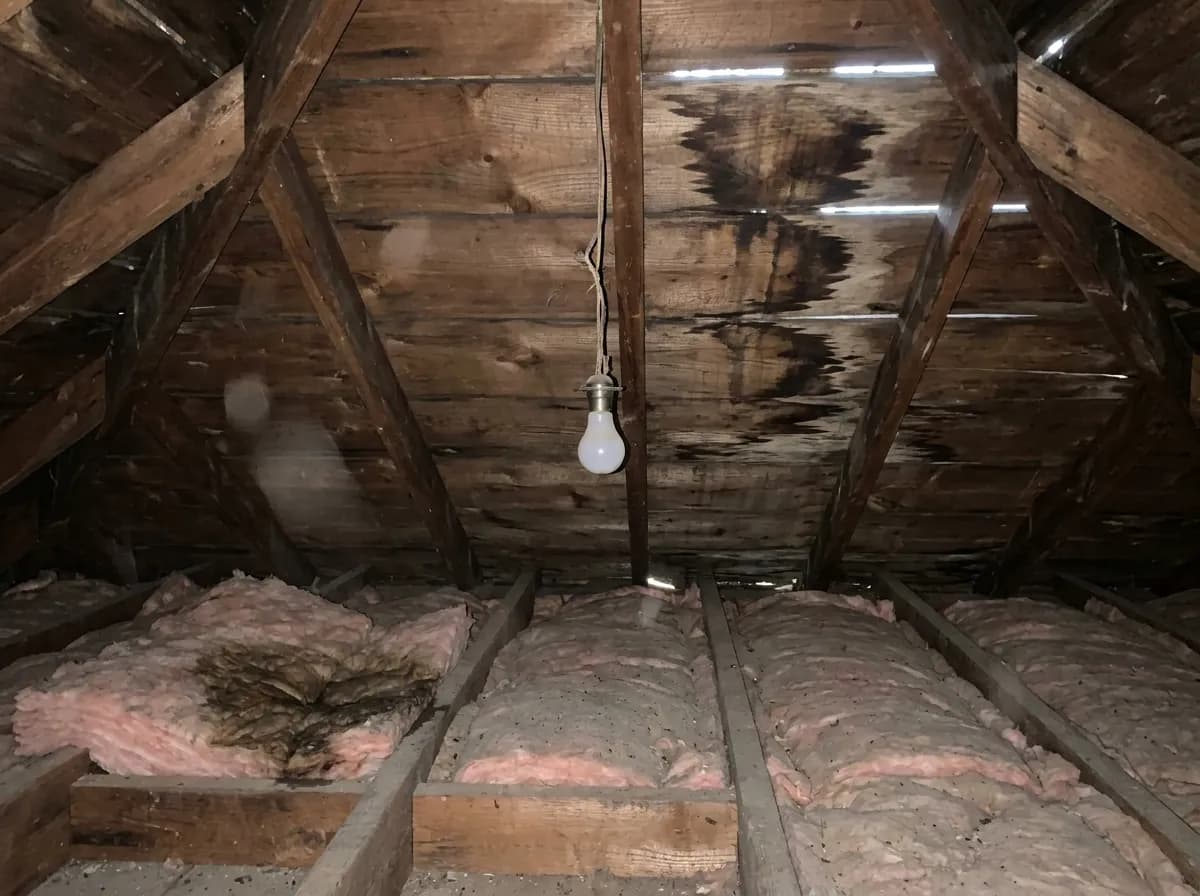
- Daylight showing through the roof boards
- Water stains on rafters or on the underside of the roof deck
- Damp, matted or stained insulation
- Frost on the underside of the roof deck on cold mornings, a sign of moisture and ventilation trouble
- A musty smell
Through the seasons
- Winter: thick ice and icicles along the eaves, and stains on ceilings near exterior walls. See our ice dam guide.
- Spring: new stains appearing after the snow melts.
- Summer: upstairs rooms that stay hot, often a ventilation problem that also ages shingles.
- Fall: shingles lifted after wind, and leaves piling up in valleys.
Age matters
Architectural asphalt roofs commonly last roughly 20 to 30 years, and older three-tab roofs often less. Many Springfield-area roofs installed in the 2011–2012 storm rebuild are now about 15 years old. If you don't know your roof's age, old permits or your home inspection report may tell you.
What an inspection adds
A contractor on the roof can check for soft decking, failing flashing details, ventilation, and how many layers are already there, then tell you whether the problems are isolated or roof-wide.
Want a contractor to look at your roof? One call connects you with a participating local roofer.
Call (888) 292-4916Questions homeowners ask
Is one missing shingle a reason to replace the whole roof?
Usually not on its own. A contractor will look at the roof's age and overall condition to tell you whether the problem is isolated.
Are dark streaks on my roof a sign it's failing?
Not necessarily. Dark streaks are often algae, which is mostly cosmetic. Moss is different: it holds moisture and can lift shingles over time.